-
Saddle Stitching
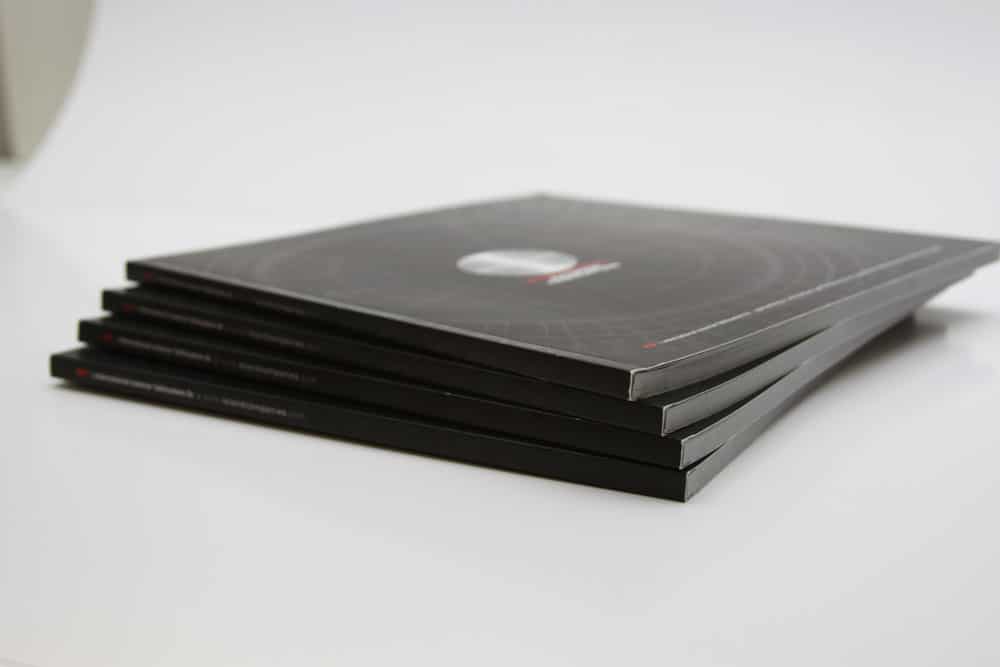
Saddle stitching is the process of inserting staples into the spine of a printed
and folded piece to bind the pages together. At Searles Graphics we can saddle-stitch
anywhere from 8 - 140 pages, depending on stock.
-
Perfect Binding
Think paperback books and (most) magazines. Perfect binding involves applying an
adhesive to one side of the pages in your piece and then wrapping the entire book
with the a cover, creating the front and back covers and the spine at the same time.
Small books are difficult to perfect bind so page counts range anywhere from about
40 - 400+ pages.
-
Coil Binding
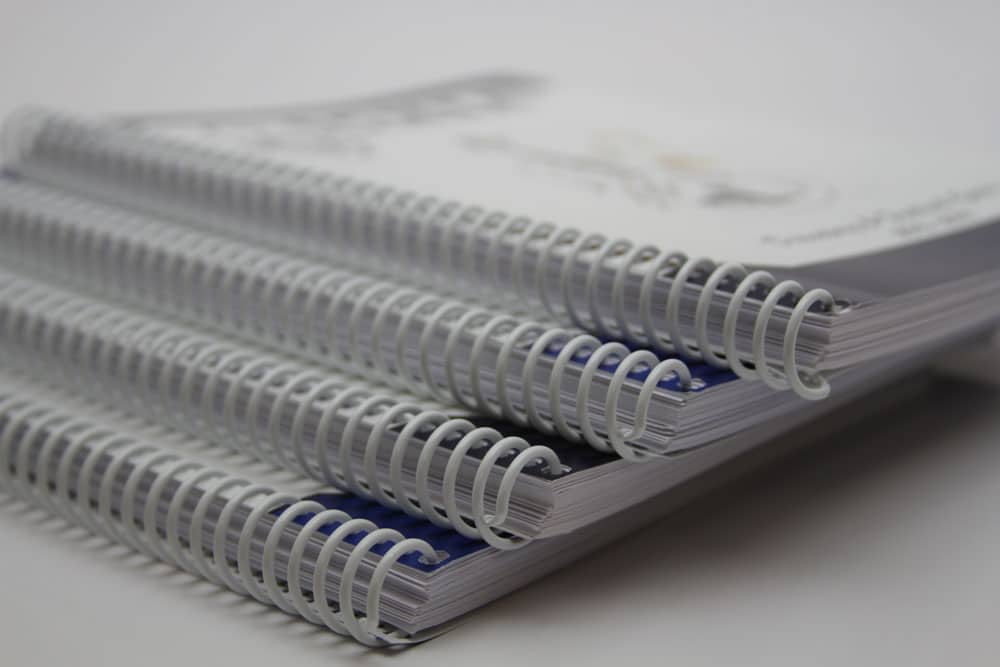
Also known as spiral binding, coil binding is used in a number of applications.
For items that see a lot of use (catalogues and directories, for example), spiral
binding is often preferred over perfect binding because it holds up better to wear
and tear over a longer period of time. There are no minimums to coil binding, and
we've handled jobs well over 400 pages.
-
Rivet Binding
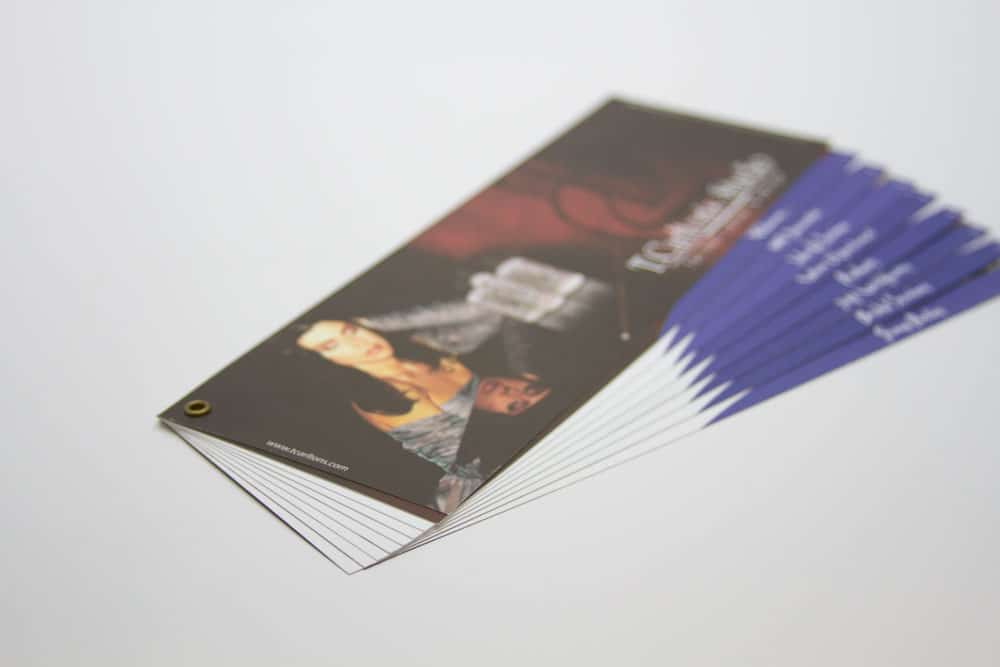
An interesting and eye-catching binding technique, rivet binding is generally used
for portfolio-type applications. If you've ever seen a color swatch book, chances
are that it was rivet-bound; a single rivet is usually inserted into one of the
top corners so that the individual swatches can be fanned out and viewed simultaneously.
-
Cutting
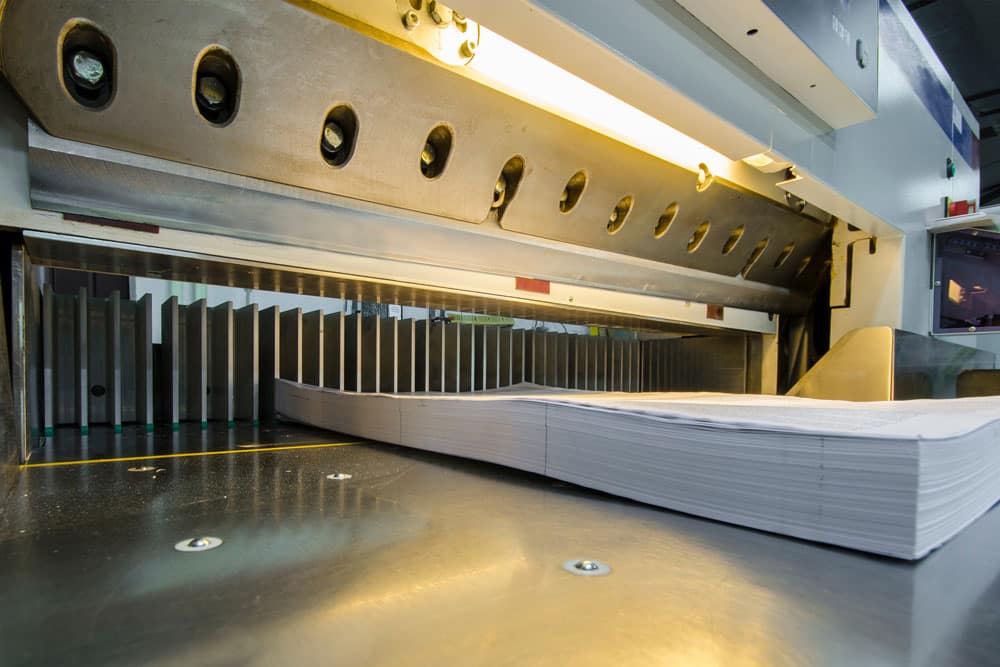
Our large format cutters allow us to print your jobs in the most economic way possible,
or to take on jobs from the trade where you may not have the equipment on hand to
handle certain work.
-
Folding
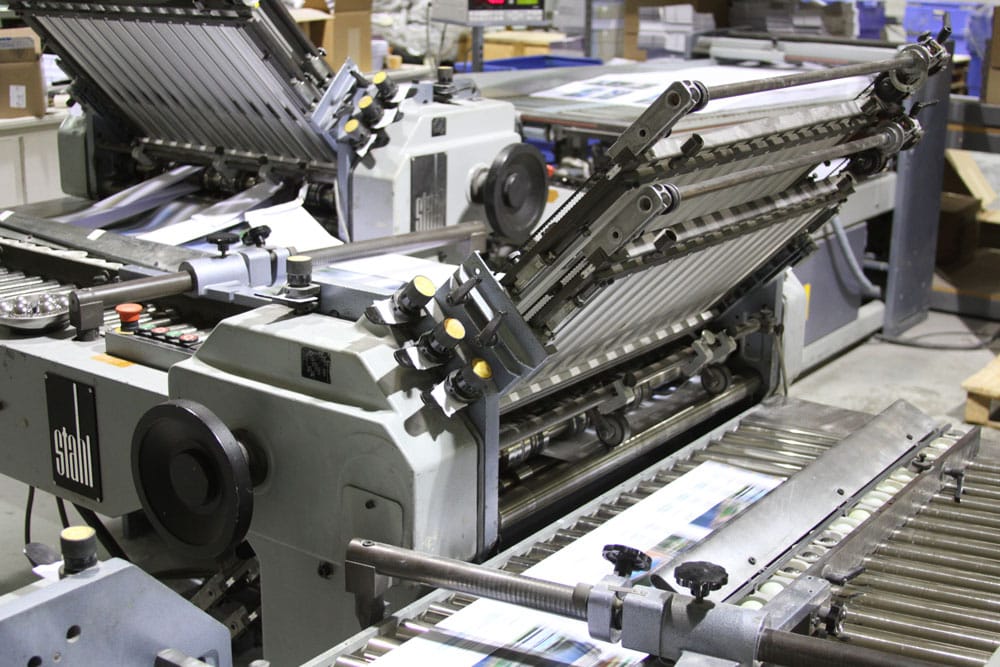
While folding paper sounds simple, it is far from it. There is an art to it. Different
paper weights, sizes, and formats can cause any number of different issues. We work
with different types of folding jobs all day long and have the expertise needed
to get your job done right. We also consult with
all of our clients to make sure your project will look the way you want
it to when it leaves our bindery.
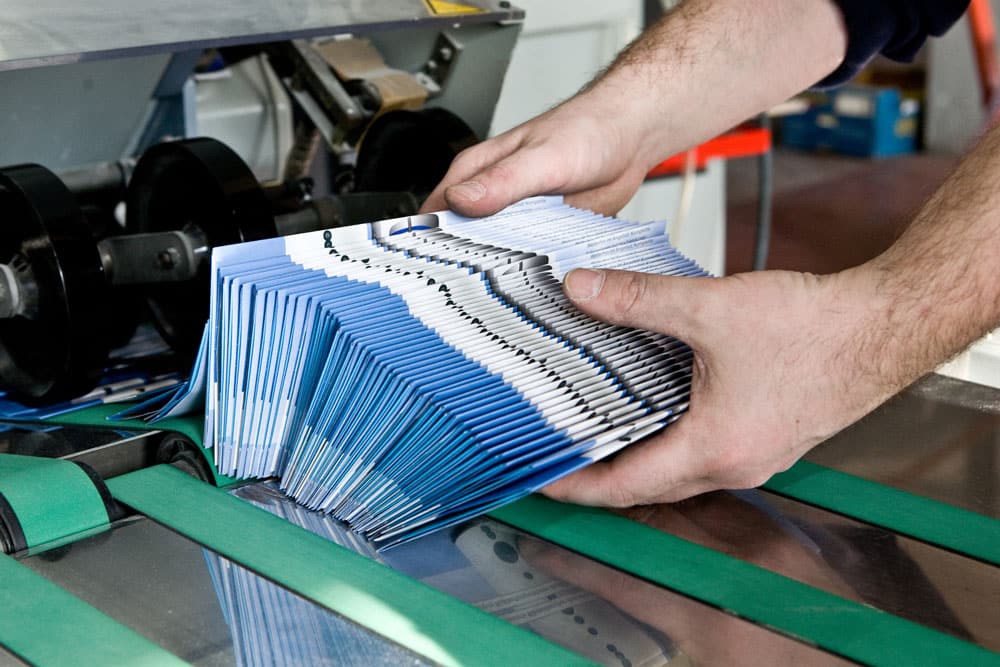
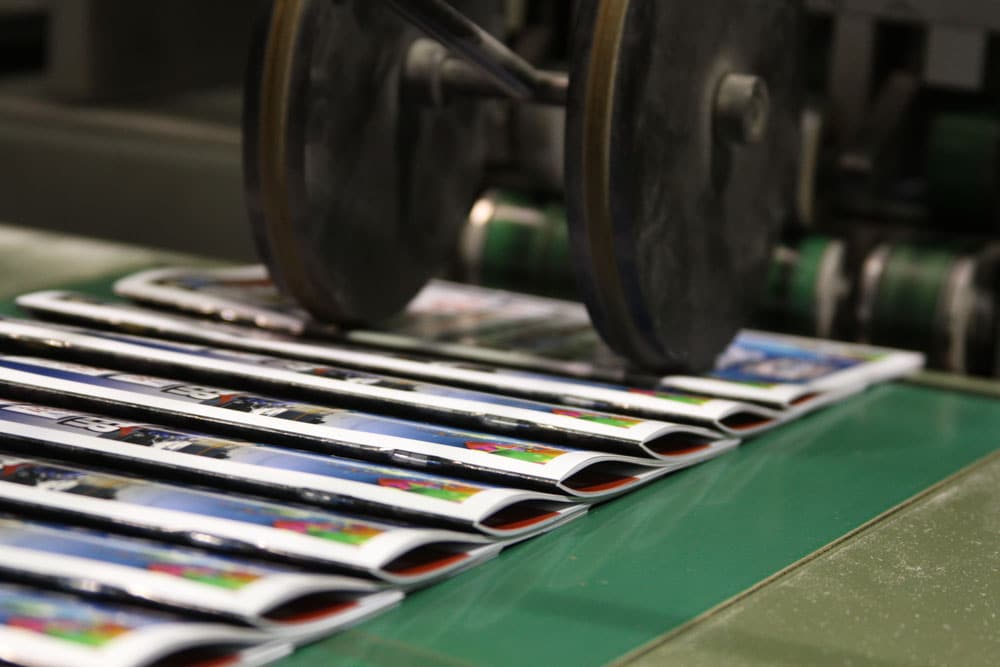
Our folders can usually be seen running large magazines, catalogs, journals, and
newsletters to prepare them for binding. We also utilize them heavily folding items
such as brochures, mailers, and annual reports.
-
Collating
There are a number of jobs that require collating services. Perfect bound books,
coil-bound books, Z-fold mailers, and stapled packets are just a few examples of
jobs that traditionally need to be collated. We offer both hand- and machine-collating
options and have yet to meet a collating job we can't handle!
-
Scoring
Scoring is a mechanical process that impresses a notch or indentation along a sheet
of paper to assist in folding the piece. Items are scored to make them easier to
fold both on our folders and by hand. Some stock / ink combinations will crack if
put directly into a folder without being scored first, particularly heavier stocks,
folds that go against the grain of the sheet, or digitally printed jobs with a lot
of toner coverage. Additionally, we have a number of clients who order a large quantity
of an item that is folded but they're only used sporadically throughout the year
(restaurant menus, thank you cards, etc.). In this case, the items often store better
flat and can be easily hand-folded when they're needed.
-
Perforating
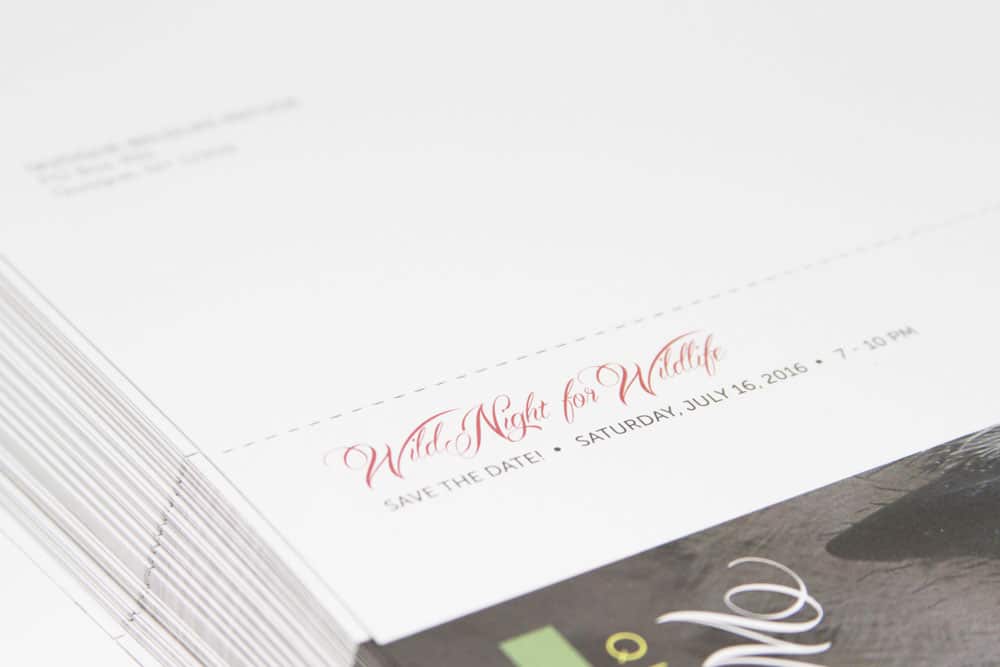
Perforating involves punching a number of small holes in a piece to make it easier
to tear apart cleanly by hand. Many of the bills you receive on a monthly basis
are perforated along the bottom so that you can tear off a portion to include in
your response envelope along with your payment. Perforating is also a useful tool
if you intend to send a coupon out to current or potential customers. The coupon
can then be torn easily from the rest of the printed piece to make it more manageable
for a customer to bring to you when making their purchase, and it also leaves your
marketing piece largely intact.
[ see Stapling below for an example of the use of perforating
by one of our clients ]
-
Hole Drilling
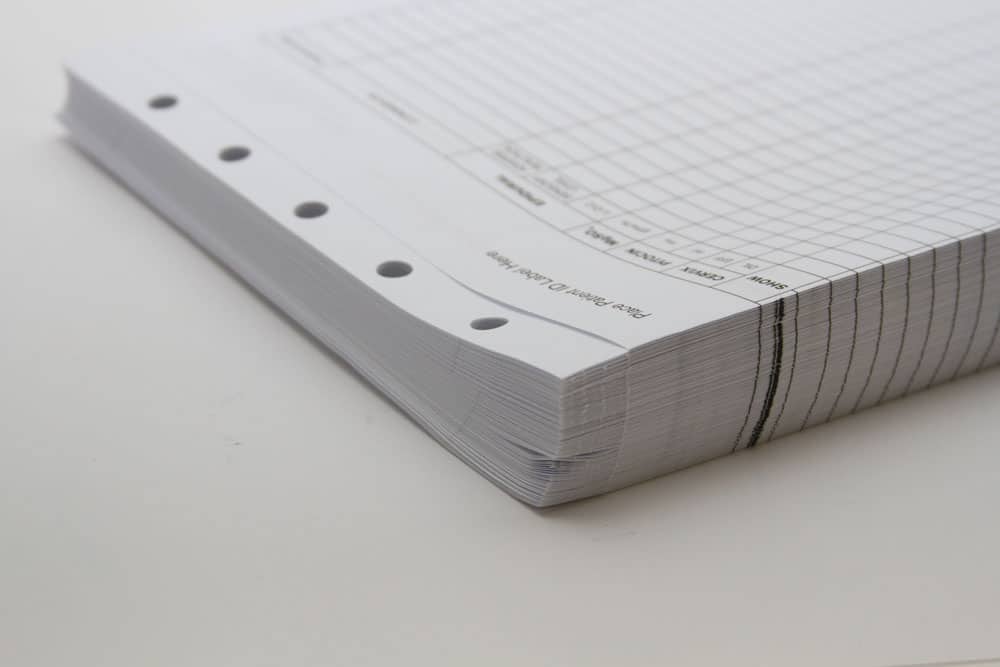
Holes can be used for a number of applications. The two most common are for easy
inclusion in 3-ring binders and holes used to make it easy for someone to hang an
item (e.g. the single hole drilled through a calendar so you can hang it up with
a pushpin or thumbtack). Whatever your application, our drills can be configured
to achieve the end result you need.

-
Shrink Wrapping
Many of the products you buy come shrink wrapped. Shrink wrapping is generally used
to protect the final product until it is in the hands of the end-user. A thin plastic
film is wrapped around your item and then heated up until it shrinks to fit tightly
around the item. This can be useful if you want to package multiple items together
(e.g. you want to include a CD with your catalog so your client can use whichever
version they prefer) or you just want to ensure your items arrive to your customers
in the same manner in which they were delivered to you.
-
Wafer Sealing / Tabbing
Tabbing can be both optional and necessary. Postal regulations now require almost
any multi-page or folded piece to be tabbed before they're mailed to ensure they
can be processed by their automated sorting machinery without damaging the piece
and jamming up their machines. Some clients choose to utilize loose inserts (as
opposed to binding or stapling them) in their pieces and a wafer seal or two helps
to ensure the insert doesn't fall out of the piece before it gets to the recipient.
-
Stapling
We offer large-format stapling for a number of applications. Simple corner staples
are common, but you can be as creative as you like! For example, one of our clients
sells tickets for their service in packs of 10. Each ticket is printed and individually
numbered (on our digital press), perforated so that it can easily be ripped from the
book while leaving the rest of the book intact, cut into stacks of
ten, collated together with some additional information material
and a front and back cover, and then stapled together through the top to create
booklets that can be sold to their clients.